
History
Beginnings

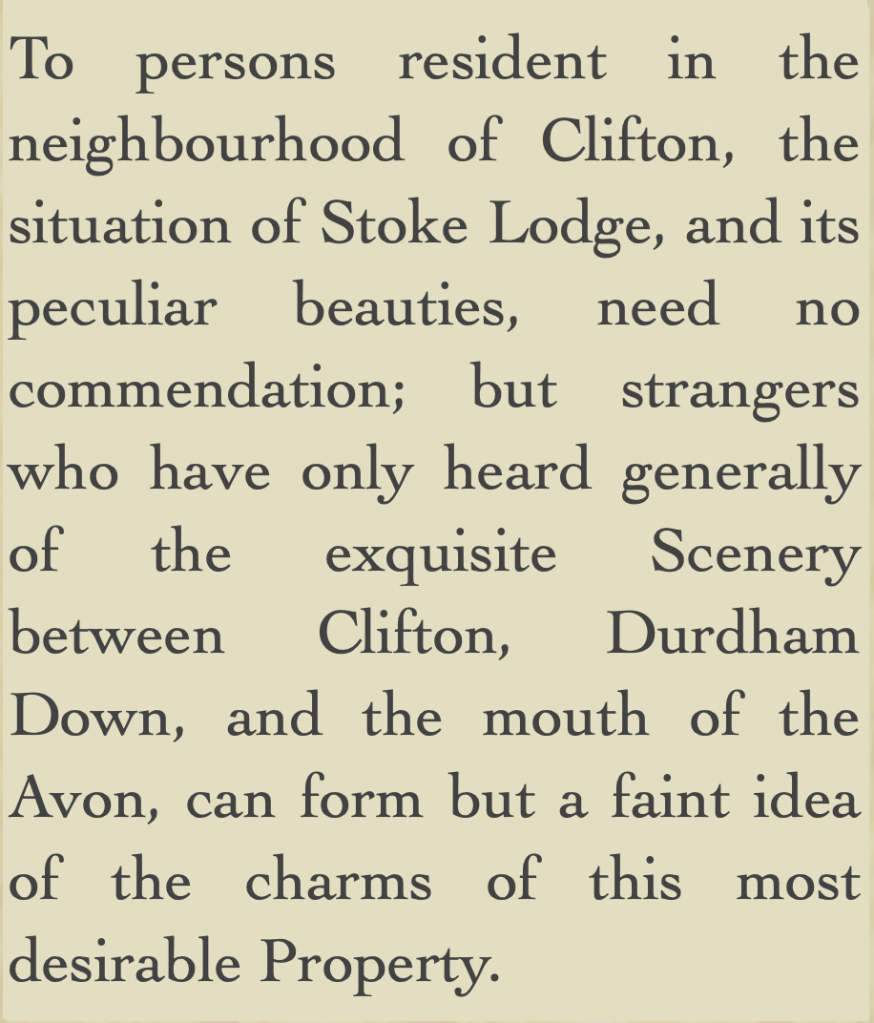
The house was built in 1836 by William Munro of Druid Stoke House – he could presumably have watched the progress of his building project across the fields from his house. It was built in the Elizabethan style, with dining, drawing and morning rooms, a housekeeper’s room or study, china pantry and spacious kitchens above arched cellars. It had eight bedrooms, two dressing rooms, water closets and piped water.
The first purchaser, Thomas Bowman, lived there for only a few years, then advertising the house for sale as a ‘substantial, elegant and commodious freehold residence… with lawns, gardens, orchard and land surrounding the same, containing in the whole 33 acres… fitted up with every attention to the comfort and convenience of a Gentleman’s family’.
The 1849 sale advertisement read:
The outbuildings comprised a coach house, stabling for four horses, harness room with servants’ bedroom over, wood house, etc.
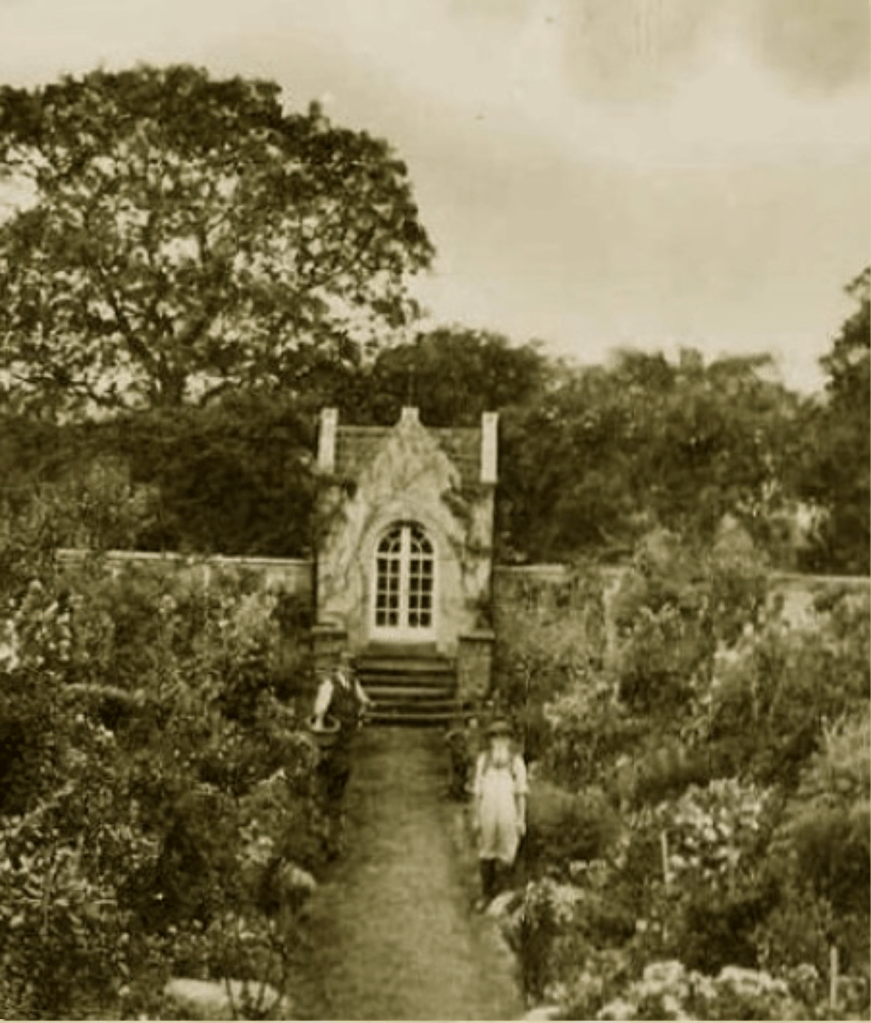
The gardens and orchard were described as being ‘in the first order, and are stocked with Standard and Wall Fruit Trees of the choicest kinds in full bearing’; the land ‘is in the highest state of cultivation and on it are all requisite Farm Buildings’.
The Pope family: Kerry cows and threats to the Downs
Stoke Lodge was next owned by a solicitor, George Pope, who is recorded on the 1851 census living there with his wife, children Sarah, Louisa and John and four servants. George seems to have been upwardly mobile and by 1861, he is recorded as a ‘Landed Proprietor’ with a cook, parlourmaid and housemaid living in, but also three families in the recently-built Lodge cottages: these were a coachman and his wife; a ‘Labouring Gardener’ with his wife and five children; and the gardener and his wife and two children: altogether 21 people living and working on the Stoke Lodge estate.
George Pope seems to have been particularly exercised by threats to public access to the Downs, writing to the Western Daily Press in March 1862 that:
‘it is of the first importance that downs and commons should remain altogether open for the recreations of the great majority of the citizens, whose games and amusements are most largely promoted and encouraged by open, undivided spaces of turf in a pure and invigorating air. This is most essentially needful for the old city of Bristol, with its dirty courts and alleys, its increasing multitudes, and with the threatened prospect of closed squares, etc…’
Closer to home, Stoke Lodge maintained livestock including a herd of Kerry cows and also prizewinning poultry: John Pope won first prize for the best drake and duck at the Bath & West of England Show in 1872. Various flowers and produce were grown and sold – an advert in November 1869 offers two dozen specimen pelargoniums of leading varieties; another, dated 30 December 1865, offers ‘ten tons of capital swedes, topped and cleaned for immediate use’ at 21 shillings a ton.
Under his ownership, the house was extended and a drive built across the estate, emerging on Ebenezer Lane next to the Lodge cottages. In hot weather you can easily see the line of the driveway across the grass; it is also slightly raised to keep the wheels of horse-drawn carriages out of any mud.
By 1871, George had retired; Sarah died in 1878 and George in 1888. Later that year his older son George (who was presumably away at school at the time of the 1851 census) became High Sheriff of Bristol, having been, as Treasurer of the Merchant Venturers, ‘more closely associated than anyone else’ with the ‘erection of the splendid schools in Unity Street, which are the theme of world-wide admiration, and with the planning of the girls’ school which is in course of erection in Cheltenham Road’ (Bristol Mercury, 13 October 1888).
The Budgett family – Jersey cows and politics
The next owner following George Pope’s death in 1888 was merchant William Budgett, with his new wife Georgiana and daughter Evelyn and five live-in servants.
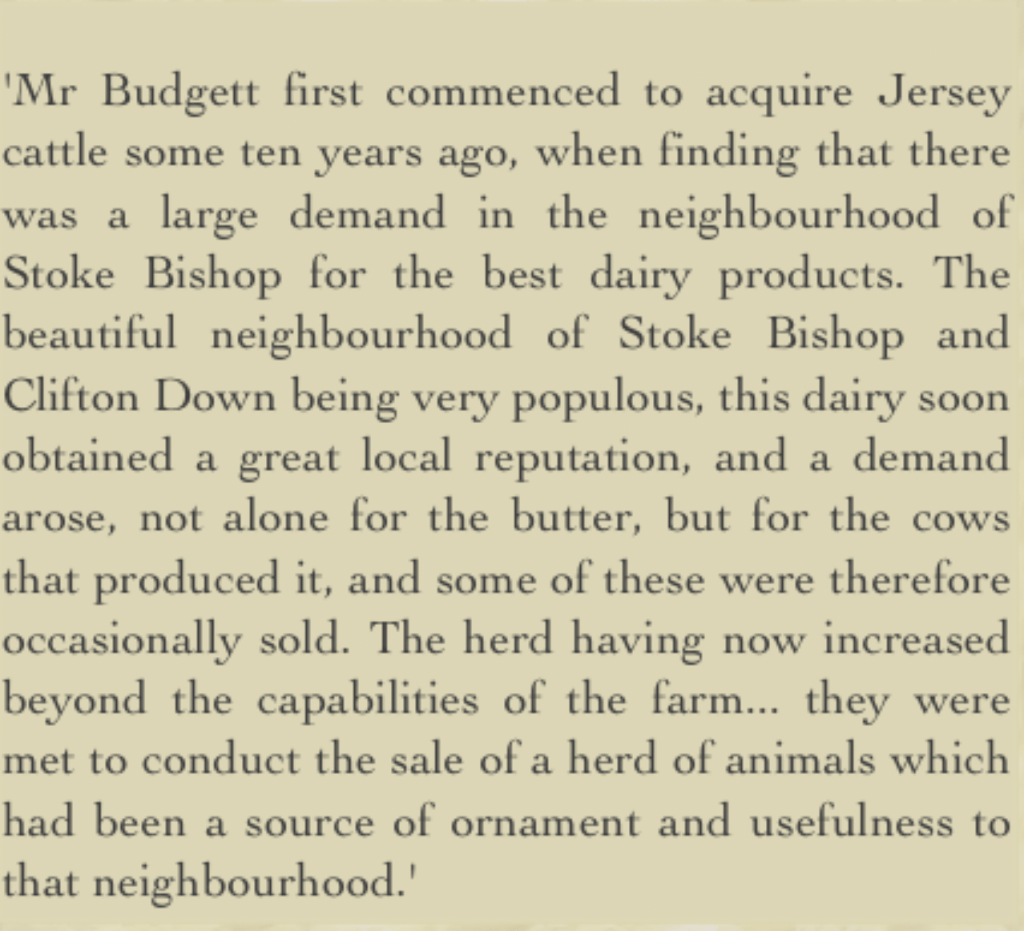
William’s family had made their money in the wholesale grocery business, and William seems to have brought his interests home with him:
Western Daily Press, 10 June 1892
William was elected to Gloucester County Council in 1895, having advertised his platform as being:
– against the expansion of Bristol (Stoke Bishop was at this stage outside the boundaries of the city);
– in favour of keeping expenses low, having due regard for the efficient administration of affairs, and
– against party politics entering into Council business
William’s wife Georgiana would go on to play a vital role on the home front during the First World War, as founder and secretary of the Bristol branch of the Red Cross. It is reported that in 1915/16 she was shown a letter from a Bristol soldier held prisoner in a German POW camp, telling of terrible conditions and lack of food. She started a fund to send food and clothing to Bristol and Gloucestershire captives in German POW camps – the invention of the Red Cross Parcel.
The James Family – a Bristol tobacco connection

From 1897 Stoke Lodge was occupied by Edward James, his wife Mabel and sons Burnet and Gilbert. Edward appears to have married into the role of tobacco manufacturer, having been born into a brewing family and then married Mabel, daughter of Sir George Edwards, and risen to become managing director of Edwards, Ringer and Bigg Ltd. This was one of thirteen companies that merged in December 1901 to form the Imperial Tobacco Company, alongside another much larger Bristol tobacco company, WD and HO Wills.
Edward James was Master of the Merchant Venturers in 1895/6, and was a councillor and alderman before holding the offices of High Sheriff in 1900 and of Lord Mayor twice, in 1904/5 and again in 1907/8. He was knighted on 9th July 1908 during the royal visit to open the Royal Edward Dock.
Clearly, the James family was expected to play a very public role in the life of the city. Stoke Lodge was used for entertaining as well as public charitable events, setting a course that would continue with future owners.
In 1901 one hundred soldiers from the Bristol Crimea and Indian Mutiny Veterans’ Association were entertained to a ‘sumptuous tea’ at the Lodge and ‘indulged in a number of outdoor amusements, the Formidable band discoursing popular music’. In November 1900 adverts in the local press announced that Mrs James was ‘at home’ to receive guests during Advent week and on the second and fourth Tuesdays of each month.
The 1901 census records the support required by the family (three members were present for the census; Burnet was a boarder at Charterhouse school) – in the house itself, there was a cook, parlourmaid, housemaid, children’s maid and footman; one of the Lodge cottages housed a coachman, William Smith, with his wife Agnes and two children (William and Agnes!) plus a groom who boarded with them. The other cottage housed the gardener, James Clark, with his wife Mary and two children Elsie and Ethel.
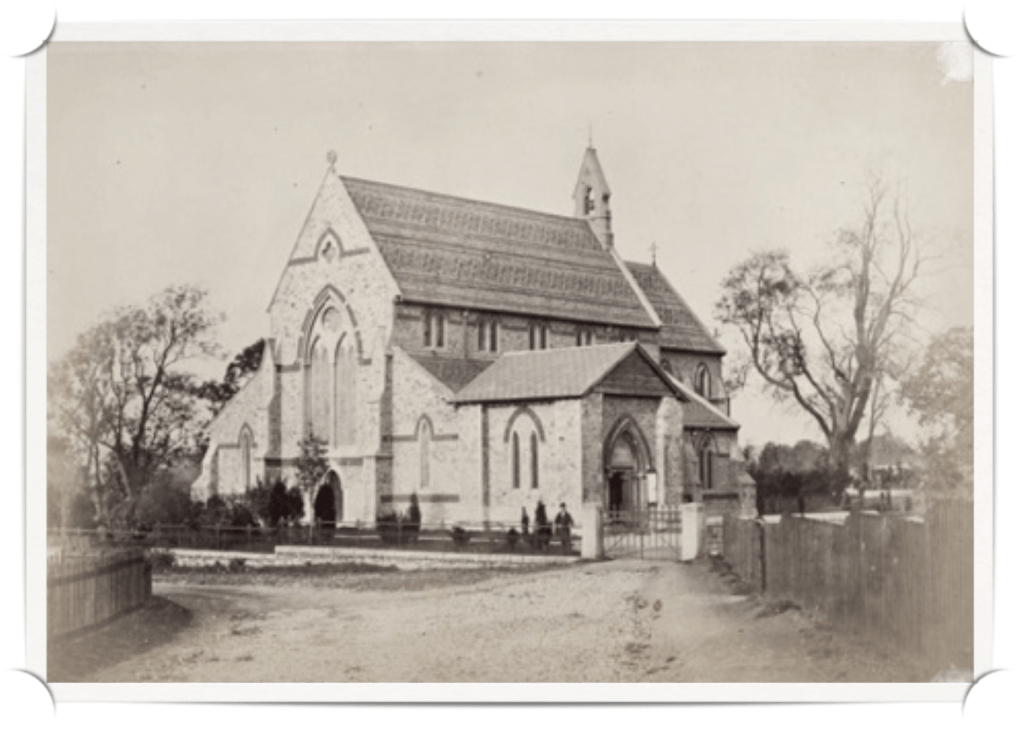
The James family moved up Stoke Hill to Springfort in 1906 and, perhaps to mark the occasion, presented a new brass altar rail ‘beautiful in design and workmanship’ to St Mary’s church. The rail was dedicated on Easter Sunday. The older son, Burnet, was an airman in World War I; he is among the fallen of Stoke Bishop named on the Memorial Cross.
The Fry family – our local chocolate connection
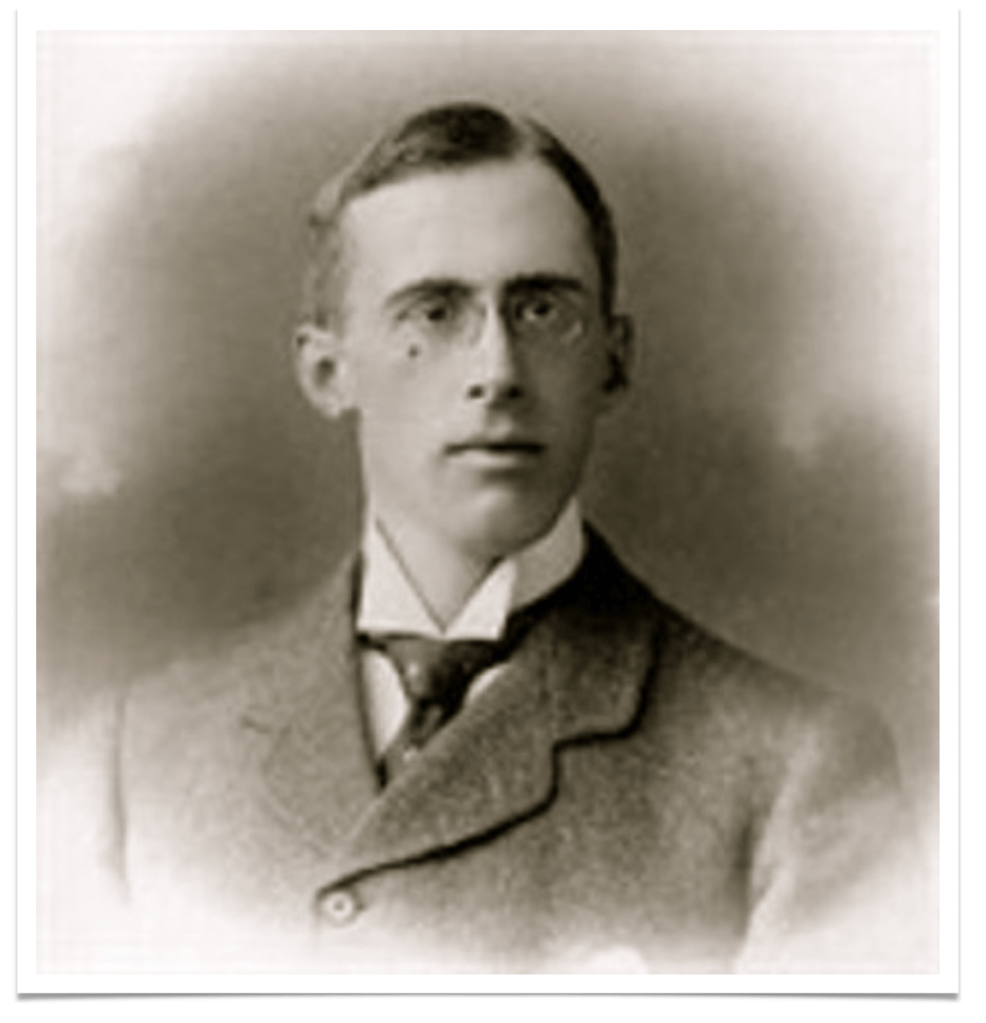
Claude Fry was the Master of the Merchant Venturers, so the Stoke Lodge estate still played host to significant city events. On 15 April 1920, Field Marshal Haig, commander of British Forces on the Western Front in WWI, visited Bristol and received an honorary degree and the freedom of the City. It was evidently quite an occasion and the Western Daily Press reports that Earl Haig took time to meet and speak in support of the welfare of ex-servicemen. Along with other festivities and celebrations Lord and Lady Haig were hosted to dinner by the Merchant Venturers; they then stayed overnight at Stoke Lodge. The following day ‘the eminent soldier greatly pleased the children by visiting Stoke Bishop school’.
By autumn 1906 Claude Basil Fry, grandson of the famous Fry’s chocolate family, was living in Stoke Lodge with his wife Marion, daughter Helen and new baby son Maurice (whose birth was announced on 12 September from the Lodge). Fry’s chocolate company had become the largest commercial producer of chocolate in the UK, with products including Fry’s Chocolate Cream, Fry’s Turkish Delight and the invention of the Easter egg in 1873. Fry’s was registered as a company in July 1912 as J. S. Fry & Sons (Africa) Limited, with Claude Basil Fry as one of the first directors. In 1919 J S Fry & Sons merged with Cadburys.
At this stage, Stoke Lodge housed the Fry family of four plus six servants: a cook, kitchen maid, parlour maid, house maid, nurse and under-nurse. In the Lodge cottages were Peter Painter, the chauffeur, and his wife Emma; and the gardener Herbert Chard, with his wife Annie and two children, Herbert and Frances.

The Butlin Sisters
The Fry family eventually moved further up Stoke Hill to Howecroft and the Misses Butlin (Annie, Mary and Emily) took up residence in January 1923. They had previously lived at The Grange, Saville Road, and seem to have left following the death of their father a few years previously. The sisters were soon advertising for a ‘good plain cook, not under 35’, as well as a housemaid (not under 30), with a note that a between maid was also kept. The oddly specific age requirements varied over time – by June 1944 the Misses Butlin required that their cook be at least 41 years old. The estate no longer seems to have been used for livestock, but an advert in June 1923 offers for sale by auction about 16 acres of grass in three lots, plus about 3 acres of winter oats.
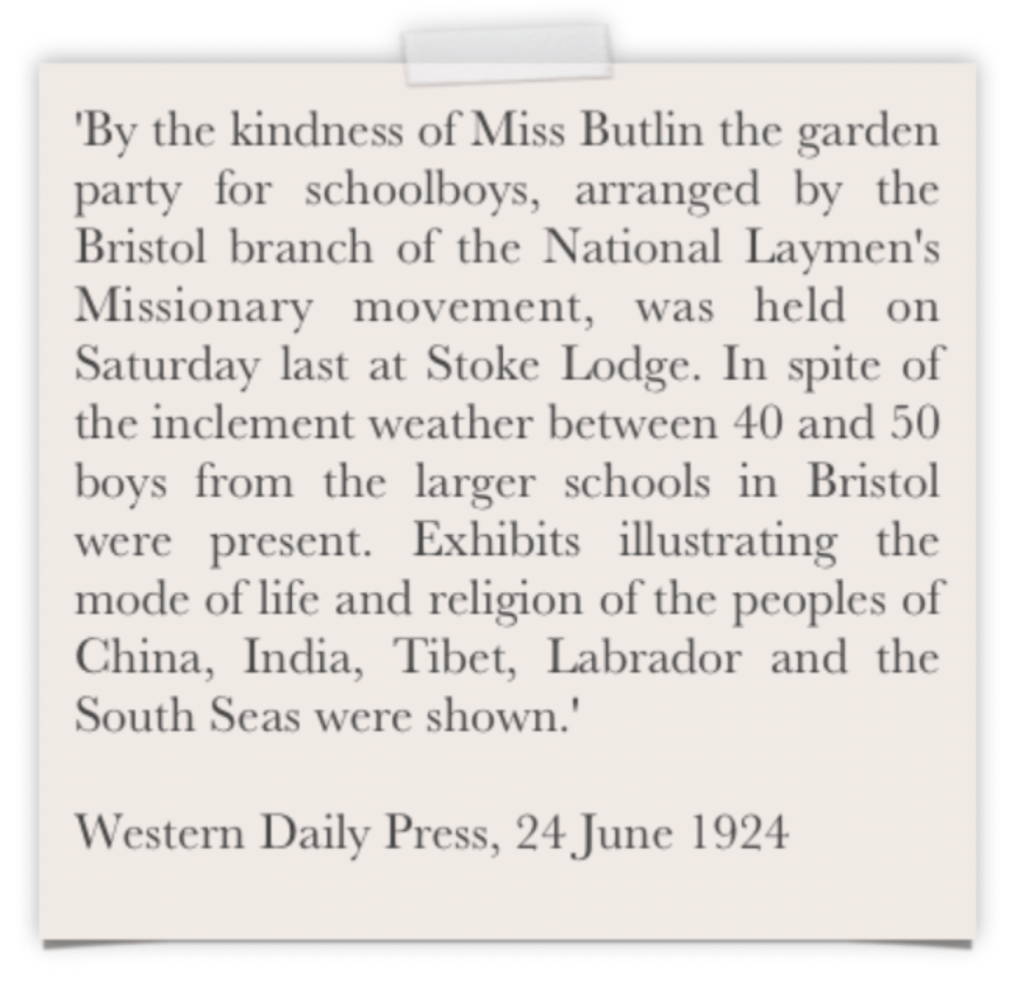
The Butlin sisters enjoyed a high profile role in Bristol society events, from opening a chrysanthemum bazaar to hosting garden parties for the Stoke Bishop Women’s Unionist Association and the National Laymen’s Missionary movement, as well as ‘at home’ events to give friends the opportunity to meet visiting notables including the Lord Bishop of Gibraltar, and sales of work in aid of the Bristol and Clifton Bible-women’s Mission.
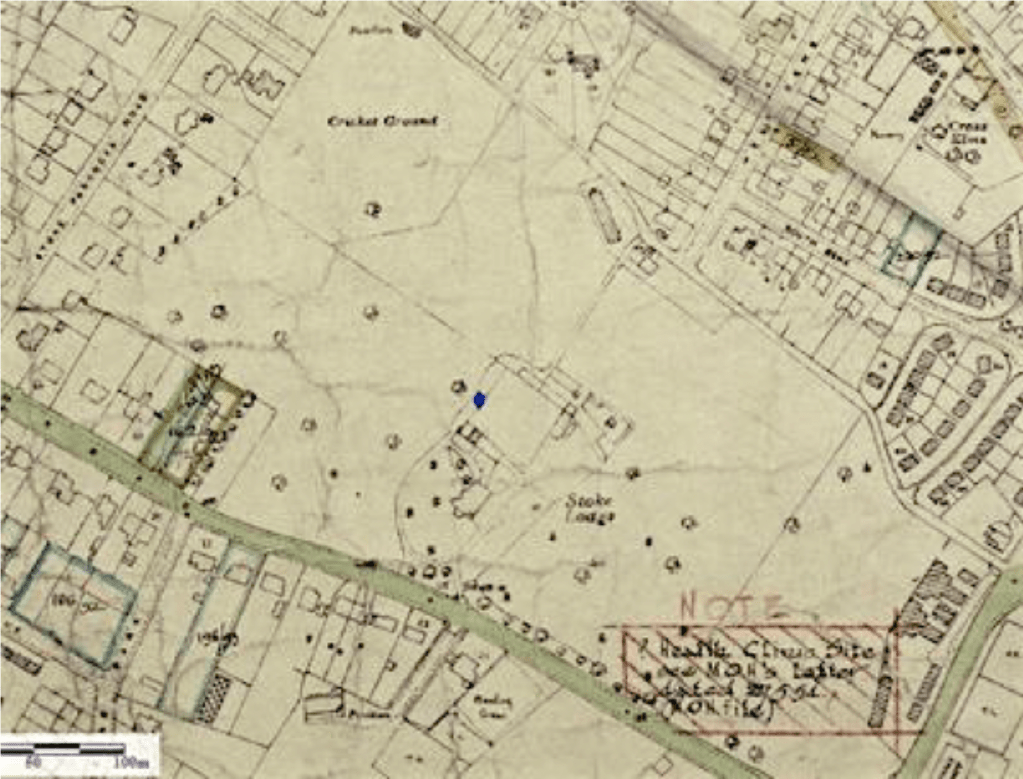
The 1921-43 OS Map shows the north west corner of the field marked as a cricket ground, and it is said that the Misses Butlin would watch the local teams playing on the field, from the shelter of the belvedere – even at this early stage and in an era when it was surrounded by other open land, Stoke Lodge was already a venue for community sports.
Miss Annie Butlin died on 28 July 1940; following the death of Mary Elizabeth Butlin on 7 May 1946, Emily Gertrude, the last of the sisters, sold up. The sisters’ effects were auctioned, including pictures, carpets, silver, plate, china, glass, clocks, a boudoir grand piano and a 22 HP Rolls Royce Drophead Foursome Coupe.
Stoke Lodge in times of war
WORLD WAR I
The Fry family was in residence at Stoke Lodge during WWI, but it’s possible that the effects of that war were still being felt in the 1930s, during the time of the Misses Butlin. Tragedy struck in September 1933 when estate gardener Frederick Reed (56), drowned in a water-butt at his home, one of the Stoke Lodge cottages, as a result of what to modern ears sounds like shell shock or post-traumatic stress disorder.
Mr Reed had been a prisoner of war for three and a half years and had suffered serious abdominal wounds; in around 1924 he had a memory lapse and went missing for eight days. In September 1933 he went missing for two days before apparently returning and being discovered next day by another gardener with his head and shoulders in the water tank; a verdict of ‘suicide while of unsound mind’ was recorded. Mr Reed was a member of the British Legion and left a widow and three sons.
WORLD WAR II
During WWII, three Nissen huts were placed at the eastern edge of Stoke Lodge (these are still visible on the 1946 aerial photo on https://maps.bristol.gov.uk/knowyourplace/).
These seem to have been used as recreation huts (and possibly living quarters?) for American troops either passing through Bristol to camps elsewhere or having a period of rest from the front. Due to reporting restrictions, the newspaper archives are fairly thin on detail, but there were regular appeals for gifts of home comforts – gramophones, records, wireless sets, games, books, mouth organs, a piano, playing cards, dart boards, table tennis bats and balls – and more fundamental things like floor coverings, soap and warm clothing, to make recreation huts like these more welcoming.
Many soldiers were billeted in homes in Sea Mills and Stoke Bishop, particularly in the run-up to D-Day in 1944 when local barracks were already full of troops. Billets were for sleeping only; during the day the soldiers would be training (perhaps in the grounds of Stoke Lodge?) or working – particularly moving military supplies at the docks at Avonmouth and loading ships for the D-Day landings.
Pitch & Pay House was used as HQ for the 519th Port Battalion. ‘The Holmes’ (now within the Botanic Gardens) was commandeered in 1943 by the US Army; General Omar Bradley of the US 12th Army Group stayed there from 1944 together with staff officers and aides, and from there he planned his troops’ role in the D-Day assault on the Normandy beaches.
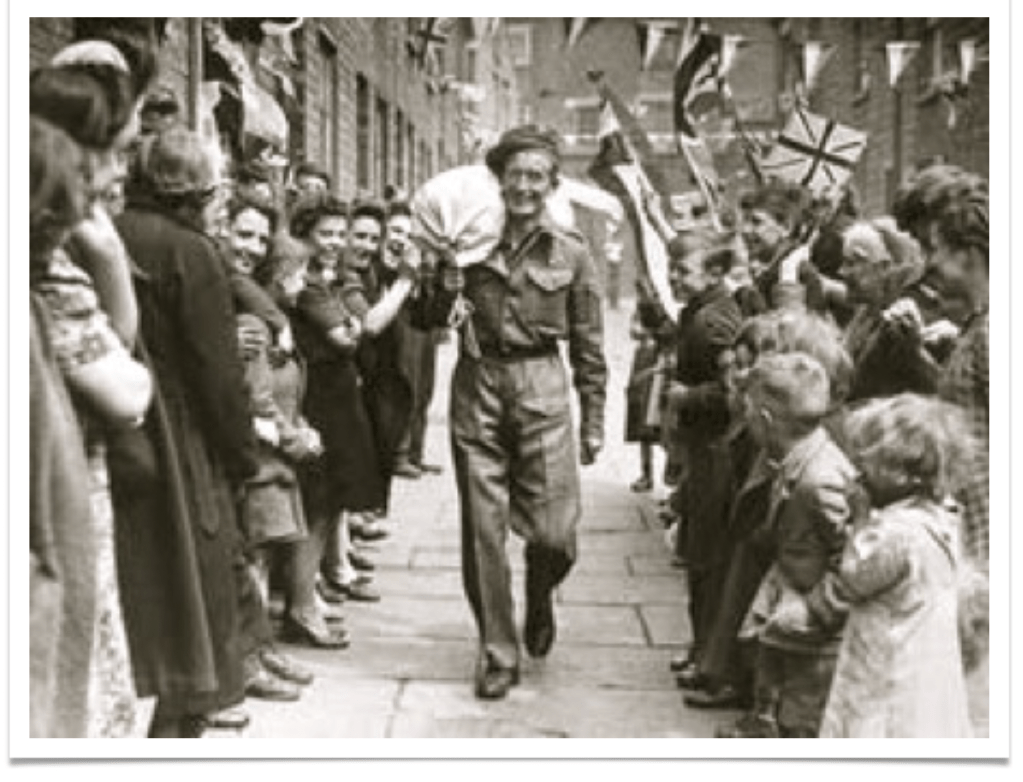
Ten months after D-Day, the Western Daily Press of 4 April 1945 said of the US troops:

1947 to 2000
The sale to Bristol City Council
Council’s plans varied over the next few years; there were thoughts of making Stoke Lodge a refuge for children above nursery age who were ‘deprived of a normal home life’, pending a decision as to their future. Ultimately it became a nursery nurses’ training college and then an adult education centre; the grounds were initially designated partly for temporary housing and health use (at one stage there was a proposal to build a health centre on the south-east corner) but through negotiations between Council departments it was ultimately agreed that the land should be laid out as playing fields.
In fact, by September 1947 the long association of local community sports clubs with Stoke Lodge had begun, with Westbury Harriers moving their headquarters to the grounds and holding cross-country events and ladies’ hockey matches in late 1947. Four or five pitches were prepared in April 1948 as part of a national effort to make more playing fields available for community use; by June 1948 inter-county athletics matches were being held at Stoke Lodge as well as local rugby, football and cricket matches. Barton Hill Old Boys RFC restarted after the war in 1946, moving to Stoke Lodge from Eastville Park; the club used one of the wartime Nissen huts as a changing room, and was based at Stoke Lodge until 1958. Local authority school Fairfield used the pitches for school sports up to 2000.

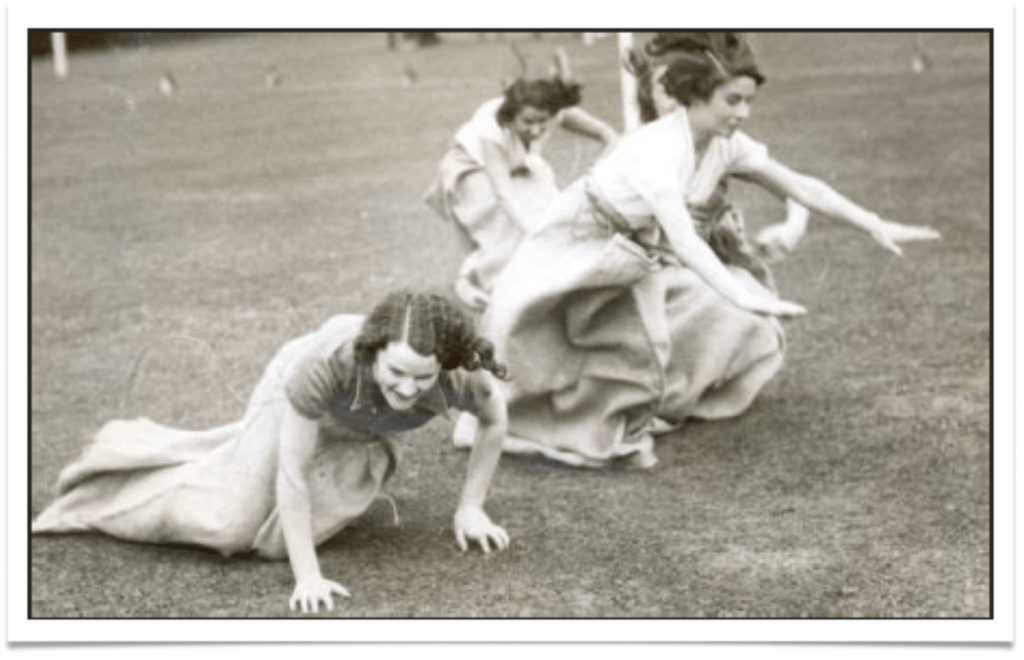
On a less serious note, the Bristol Co-operative Society held their first sports festival at Stoke Lodge in June 1949, with teams from London, Newcastle and Cardiff taking part.
There was a wide variety of events, from distance running, walking and relay races to egg and spoon, skipping and sack races – not forgetting obstacle races and the classic slow bicycle race, with an interdepartmental tug o’ war which we are told was won by the Furnishing Department.
It wasn’t all about sports, though – a wide variety of groups used Stoke Lodge for different purposes. Westbury Baptist Church held annual garden fetes at Stoke Lodge (in 1950 the programme included ‘the crowning of the Rose Queen, a Punch and Judy show, concert, a comical cricket match, sideshows and pony rides’); in that year Stoke Lodge also played host to the Bristol County Scout and Rover Scout sports championships, with twelve districts competing. A political fete in July 1949 spurred a complaint to the Western Daily Press from a nearby resident about ‘the noise, the singing and lastly the political speech, well amplified by loudspeakers… there was no alternative but to listen or being driven from our homes’. No such complaints were recorded about sports at Stoke Lodge!
2000 to present
STOKE LODGE REPRESENTS PARKLAND
Stoke Lodge was listed (Grade II) in June 1994 and is designated by the Council as Important Open Space.
In 2004 when the Council was considering alternative sites for a new school, one of the reasons for choosing Redland playing fields rather than Stoke Lodge was that ‘While both sites accommodate grass playing pitches that are used as detached playing fields by local schools…
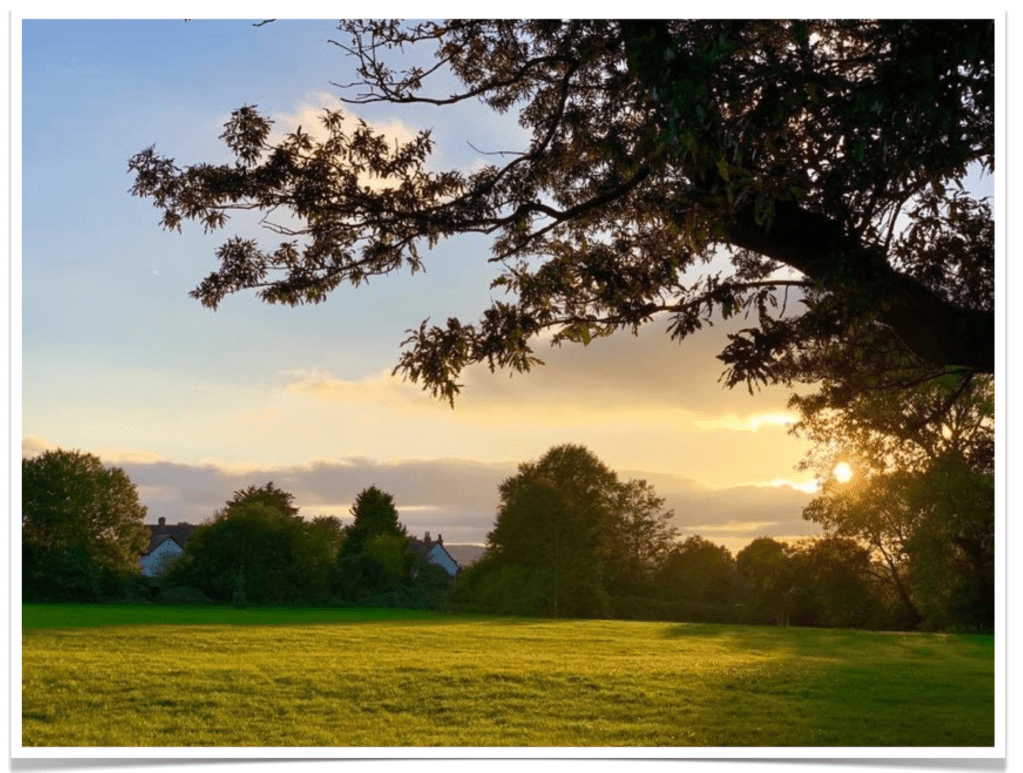
Stoke Lodge is far more enclosed than Redland playing fields because of the strong boundary that is formed by extensive trees and shrubbery… The Stoke Lodge site is characterised by its gentle topography, high level of enclosure, views into and out of the site and the parkland trees within the site… Stoke Lodge has a higher visual amenity due to the wide variety of trees that are in excellent condition spread throughout the site and as such represents parkland.’

COTHAM SCHOOL AND TVG 1
In 2000 Cotham School took over use of Stoke Lodge for their PE provision and Fairfield left. Concerns about possible development of the site that would limit access for local people led to an application for TVG (Town or Village Green) status being made in 2011.
Town or village green status can be granted to land if it has been used ‘as of right’ by a significant number of local inhabitants for sports and pastimes for a twenty year period. The crucial thing from the community’s point of view is that a TVG cannot be enclosed by a fence; there are also restrictions on developing land that has been registered as a TVG – so you can only make changes that are for the ‘better enjoyment’ of the green. The other crucial thing to know is that it preserves the balance of use of the field by the school, local sports clubs, and the community – so it gives everyone certainty and preserves the land for future generations, just as it has been for past decades.
This process usually takes up to a year and often involves an independent inspector to consider whether the relevant tests are met. The final decision is taken by the Council’s Public Rights of Way and Greens Committee. The PROWG Committee decided to grant TVG status to Stoke Lodge in December 2016 but its decision was challenged by Cotham School via judicial review. The school lost on all its substantive arguments at that review; however the High Court found procedural errors in the way that Bristol City Council had reached and recorded its decision to grant TVG status. The decision went back to a differently-composed PROWG Committee which voted against registration in June 2018. The only ground on which it was suggested that the legal test was not met related to some Avon County Council signs erected in the mid-1980s, which were said to have made use not ‘as of right’ up to April 1996.
TVGs 2 & 3 AND THE FENCE
In September 2018 and July 2019 local residents made two further applications joined together as one (for technical legal reasons) to register around 22 acres of green space within the Stoke Lodge estate as a Town or Village Green (TVG). Again, the aim was to protect this historic and beautiful open space from future development and preserve it for schools, local team sports and for informal public recreation and access.
However at the beginning of 2019 and despite the live TVG process, Cotham School put up a 2m high, 1.5km long perimeter fence around its leased area of the site on the basis of permitted development rights. The local community went to great lengths to minimise the damage to the root zones of our protected trees, and to protect the local fox and badger populations. However, the school was not deterred even by the prospect that if the land was registered it would have to remove the fence.
Once the fence was up, gates were often locked even when the school weren’t using the site, most notably in the CoViD 19 pandemic when people needed space to exercise at a safe distance. Perimeter paths became dangerous and impassable during the winter months and the school refused to discuss compromise solutions.
Relations soured but the ongoing campaign by We Love Stoke Lodge supporting the TVG applicant to protect this much-loved green space brought the people of the neighbourhood closer than ever.
THE PAVILION REFURBISHMENT
Cotham School applied to redevelop and extend the pavilion building at Stoke Lodge, but its application was rejected twice by the Council and a third time by the Planning Inspectorate on appeal – each time purely because of concerns about the impact of the proposals due to increased traffic on the narrow local roads.
Instead of rebuilding, the school finally decided to ‘refurbish’ the pavilion on the basis that this was repairs and maintenance, but traffic problems have not been addressed.
TVG REGISTRATION
Finally, after a further five years, much delay and a very complex and expensive process, the application to register Stoke Lodge as a Town or Village Green was accepted at a meeting of the Public Rights of Way and Greens Committee on 28 June 2023. The Committee was advised on its decision-making process by a senior KC, to mitigate against the risk of procedural errors in the event of a further judicial review.
Cotham School has chosen to challenge registration by a different legal route which remains ongoing, but the land is a registered TVG and open for public access and enjoyment 24/7.
 Stoke Lodge Village Green